
Internal Body Odor Solutions

Body OdorStarts Inside Your Body

Showering isn't enough when the source is internal. Gut bacteria, liver function, zinc deficiency, and toxin buildup all contribute to how you smell — and no deodorant can fix that.

98%
Noticed Results Within 24 Hours
75%
Reduction In Body Odor Within 14 Days
100%
Of Clinical Participants Saw Results

6 Internal Root Causes

Root Cause 1 Of 6

Gut Dysbiosis

Imbalanced gut bacteria produce odorous volatile compounds — including hydrogen sulfide and trimethylamine — absorbed into the bloodstream and excreted through skin and breath. Restoring gut balance is one of the most effective ways to address chronic body odor.

Addressed By: Chlorophyll + Parsley

The 6 Internal Root Causes Of Body Odor

Persistent body odor that returns despite good hygiene almost always has an internal origin. Here's what's actually happening inside your body — and why topical products can't address it.

01

Gut Dysbiosis — Imbalanced Gut Bacteria

Your gut contains trillions of bacteria. When this ecosystem is imbalanced — a condition called dysbiosis — certain bacteria produce odorous compounds as metabolic byproducts, including hydrogen sulfide and trimethylamine (TMA). These compounds are absorbed into your bloodstream and excreted through your skin and breath continuously, regardless of how often you shower.

Gut dysbiosis is one of the most common and overlooked causes of chronic body odor. It can be triggered by antibiotic use, poor diet, stress, or illness — and it often coexists with digestive symptoms like bloating and gas.

Addressed by: Chlorophyll + Parsley
02

Sluggish Liver Detoxification

Your liver is your body's primary detox organ, responsible for processing and eliminating metabolic waste, hormones, and toxins. When liver detox pathways are sluggish — due to poor diet, alcohol, medications, or nutritional deficiencies — odor-producing compounds accumulate in the bloodstream and are excreted through sweat and skin as an alternative elimination pathway.

This is why people who support liver function often notice a significant reduction in body odor — the liver is processing and eliminating compounds that would otherwise come out through the skin.

Addressed by: Organic Parsley
03

Dietary Sulfur Compounds

Garlic, onion, cruciferous vegetables, and red meat are high in sulfur compounds. When metabolized, these compounds — particularly allyl methyl sulfide from garlic — enter your bloodstream and are excreted through your sweat glands for up to 72 hours after eating. This is why you can smell like garlic the day after eating it, even after multiple showers.

The compound is literally coming out of your pores. No topical product can stop this — the only effective approach is to bind the compounds internally before they're fully absorbed.

Addressed by: Chlorophyll
04

Heavy Metal Accumulation

Heavy metals like mercury, lead, and arsenic accumulate in body tissues over time through environmental exposure, certain foods, and contaminated water. As your body slowly excretes these metals through sweat, they produce a distinct metallic or chemical odor that is particularly resistant to topical treatments.

Chlorophyll has a well-documented affinity for binding to heavy metals in the digestive system, helping to capture and eliminate them before they reach the bloodstream and sweat glands.

Addressed by: Chlorophyll
05

Zinc Deficiency

Zinc plays a direct role in body odor by inhibiting the bacteria that break down sweat compounds into odorous molecules. Studies consistently show that people with low zinc levels experience stronger, more persistent body odor — and that zinc supplementation produces measurable improvements.

Zinc deficiency is more common than most people realize, particularly in people who eat low-meat diets, have digestive absorption issues, or experience high physical stress. It's also essential for immune function, skin health, and hormonal balance.

Addressed by: Organic Parsley (natural zinc source)
06

Candida Overgrowth

Candida is a type of yeast that naturally exists in your gut in small amounts. When it overgrows — triggered by antibiotic use, high sugar diets, or immune suppression — it produces volatile organic compounds (VOCs) as metabolic byproducts. These VOCs enter the bloodstream and are excreted through sweat and breath, contributing to a yeasty or musty body odor that is particularly difficult to address topically.

Candida overgrowth also disrupts the gut microbiome more broadly, compounding the dysbiosis-driven odor cycle and often contributing to intimate area odor that persists despite good hygiene.

Addressed by: Parsley + Chlorophyll

Why Deodorant Works For Some People — And Not Others

The type of body odor you have determines which solutions will work. Surface odor responds to topical products. Internal odor requires an internal approach.

Odor Type
Surface Odor
Internal Odor
Source
Skin bacteria breaking down sweat on the surface
Compounds produced internally, excreted through sweat glands
Returns After Showering?
Slowly — hours for bacteria to repopulate
Quickly — within 1–3 hours, source is continuous
Responds To Deodorant?
Yes — effectively masks or inhibits surface bacteria
Partially or not at all — source isn't on the skin
Affected By Diet?
Minimally
Significantly — garlic, onion, alcohol all worsen it
Affects Multiple Areas?
Usually localized to underarms or feet
Yes — underarms, breath, feet, intimate areas simultaneously
Solution
Deodorant, antiperspirant, regular showering
Internal supplement working at the source

Foods That Make Body Odor Worse — And Better

What you eat has a direct and measurable impact on how you smell. Dietary compounds are metabolized and excreted through your sweat glands for up to 72 hours after eating.

Foods That Increase Odor
Garlic & OnionAllyl methyl sulfide is excreted through sweat for up to 24 hours — no shower removes it once it's in your bloodstream
Red MeatAmino acid breakdown produces odorous compounds that are continuously excreted through sweat for hours after eating
Cruciferous VegetablesBroccoli, cabbage, and Brussels sprouts contain glucosinolates that break down into sulfur compounds during digestion
AlcoholMetabolized into acetaldehyde, which is excreted through breath and sweat — and places significant burden on liver detox pathways
Refined SugarFeeds odor-producing gut bacteria, worsening dysbiosis and increasing volatile compound production throughout the digestive system
CoffeeStimulates apocrine sweat glands and contains sulfur compounds — also dehydrates, concentrating odor-producing compounds in sweat
Foods That Reduce Odor
ParsleyNatural deodorizing volatile oils bind to odor compounds in the gut — traditionally served alongside garlic dishes for exactly this reason
Leafy Greens & Chlorophyll-Rich FoodsChlorophyll binds to odor-producing molecules in the gut before they're absorbed into the bloodstream and excreted through sweat
Citrus FruitsVitamin C and antioxidants support liver detox function and help neutralize odor-producing compounds before they reach the bloodstream
Probiotic FoodsYogurt, kefir, and fermented foods restore gut bacteria balance, directly reducing the odorous volatile compounds produced by dysbiotic bacteria
WaterDilutes the concentration of odor-producing compounds in sweat — adequate hydration is one of the simplest and most effective odor reducers
Peppermint & Fresh HerbsAntimicrobial properties regulate odor-producing bacteria in the gut and on the skin's surface, while natural volatile oils provide freshness from within
The Science Is Clear

Your Body Odor Has An Internal Root Cause.
There's A Solution That Works At The Source.

Most people spend years trying topical products that can't address the real problem. It Just Works is the only internal deodorizing supplement with independent clinical data showing 100% of participants experienced reduced body odor.

Get The Solution →
100%
Of Clinical Participants Saw Results
98%
Noticed Results Within 24 Hours
75%
Reduction In Underarm Odor At 14 Days

How Your Gut Health Directly Affects How You Smell

The gut and skin are in constant communication through what researchers call the gut-skin axis — a bidirectional relationship where the health of your digestive system is directly reflected in your skin, sweat, and body odor.

Your gut microbiome — the trillions of bacteria, fungi, and other microorganisms living in your digestive tract — produces hundreds of metabolic byproducts as it processes food. When your microbiome is balanced, these byproducts are largely beneficial or neutral. When it's imbalanced, the byproducts skew toward odorous, inflammatory compounds.

These compounds don't stay in your gut. They cross the intestinal lining, enter your bloodstream, and are carried throughout your body. Your skin and sweat glands act as secondary elimination organs — when your liver and kidneys are overwhelmed, the skin picks up the slack, excreting these compounds through sweat. This is the gut-skin axis in action: what's happening in your gut shows up on your skin.

Research has consistently shown that people with gut dysbiosis — imbalanced gut bacteria — have measurably different sweat compositions than people with healthy microbiomes. The odorous compounds trimethylamine (TMA), hydrogen sulfide, and various volatile fatty acids are all produced by specific strains of gut bacteria and excreted through sweat when present in excess.

This is why addressing body odor at the gut level — rather than at the skin's surface — produces results that topical products simply cannot match. You're not masking the output. You're changing what's being produced at the source.

70%
Of your immune system lives in your gut — gut health affects every system in your body, including how you smell

The Pathway

Gut bacteria → produce odorous compounds → absorbed into bloodstream → liver attempts to process → excess excreted through sweat and skin → body odor

The Solution

Bind odorous compounds in the gut before absorption → support liver processing → reduce what reaches the bloodstream → less excreted through sweat

Why It Takes 24–36 Hours

The supplement needs one full digestive cycle to begin binding and eliminating odorous compounds — which is why most people notice results within the first day

Why Some Sweat Smells And Some Doesn't

Not all sweat is the same. Your body has two types of sweat glands — and understanding the difference explains why body odor is so much more complex than most people realize.

Eccrine Glands

The cooling system — found all over the body

LocationDistributed across the entire body surface — highest density on palms, feet, and forehead
FunctionThermoregulation — cools the body through evaporation during exercise or heat exposure
CompositionMostly water and electrolytes — relatively odorless on its own
Odor RiskLow — eccrine sweat only becomes odorous when it mixes with skin bacteria or carries internally produced compounds
Triggered ByHeat, exercise, fever — physical temperature regulation

Apocrine Glands

The odor source — concentrated in key areas

LocationUnderarms, groin, intimate areas, around the nipples, and scalp — areas with high hair follicle density
FunctionOriginally pheromone signaling — now primarily a secondary elimination pathway for metabolic waste
CompositionRich in proteins, lipids, and steroids — the compounds that bacteria and internal metabolites convert into odorous molecules
Odor RiskHigh — apocrine secretions are the primary vehicle for both surface bacterial odor and internally produced odorous compounds
Triggered ByStress, hormonal changes, emotional arousal — not just heat or exercise
Why This Matters: Deodorant works by targeting bacteria on the skin surface around apocrine glands — or blocking the glands with antiperspirant. But when the odorous compounds are coming from inside your body and being excreted through apocrine secretions, no topical product can intercept them. The compounds are already in the sweat before it reaches the skin's surface. This is why internal supplementation is the only approach that addresses the root cause for people with internal body odor.

Lifestyle Factors That Worsen Internal Body Odor

Diet is the most significant lifestyle driver of internal body odor — but it's not the only one. These factors can significantly worsen odor by disrupting gut bacteria, burdening the liver, or altering sweat composition.

Chronic Stress

Stress directly activates apocrine sweat glands — the glands responsible for body odor — through cortisol and adrenaline release. Stress also disrupts gut bacteria balance, increasing the production of odorous volatile compounds. People under chronic stress often notice significantly stronger body odor even without dietary changes.

Stress-induced sweat is compositionally different from exercise sweat — it's richer in the proteins and lipids that bacteria convert into odorous molecules.

Impact: High — affects both sweat composition and gut bacteria

Sleep Deprivation

Poor sleep impairs liver detoxification function — the liver does much of its detox work during sleep, particularly between 1–3am. When sleep is disrupted or insufficient, the liver's ability to process and eliminate odor-producing compounds is reduced, increasing what gets excreted through sweat the following day.

Sleep deprivation also elevates cortisol, compounding the stress-related apocrine activation effect.

Impact: Moderate to High — impairs liver detox and raises cortisol

Certain Medications

Several common medications are known to alter body odor by affecting sweat composition, gut bacteria, or liver function. Antibiotics are the most significant — they disrupt the gut microbiome broadly, often triggering dysbiosis that persists for months after the course ends. Antidepressants, blood pressure medications, and some supplements can also alter sweat composition.

If body odor worsened after starting a new medication, the medication may be a contributing factor worth discussing with your healthcare provider.

Impact: Variable — antibiotics are the most significant offender

Hormonal Fluctuations

Hormonal changes — during menstrual cycles, perimenopause, postpartum recovery, or thyroid dysfunction — alter both sweat composition and gut bacteria balance. Estrogen and progesterone fluctuations directly affect apocrine gland activity, which is why many people notice significantly stronger or different body odor at specific points in their cycle or during hormonal transitions.

This is one of the most common reasons people find standard deodorants suddenly stop working — the underlying sweat composition has changed, not their hygiene.

Impact: High — directly alters apocrine gland activity and gut balance

Dehydration

When you're dehydrated, your body produces less sweat volume — but the concentration of odor-producing compounds in that sweat increases significantly. Dehydration also impairs kidney function, shifting more elimination burden to the skin. Even mild chronic dehydration can noticeably worsen body odor.

Adequate water intake is one of the simplest and most underrated interventions for body odor — it dilutes the compounds being excreted and supports all elimination pathways.

Impact: Moderate — concentrates odorous compounds in sweat

Intense Or Prolonged Exercise

High-intensity exercise significantly increases sweat volume and activates both eccrine and apocrine glands simultaneously. For people with internal body odor, this means more of the internally produced odorous compounds are excreted at once — making post-workout odor significantly stronger than it would be for someone without an internal root cause.

Exercise itself is beneficial for gut health and detoxification — but it amplifies whatever is already being excreted, making internal odor more noticeable during and after workouts.

Impact: Amplifying — intensifies existing internal odor output

Who Benefits Most From Internal Supplementation

Internal deodorizing supplements are most effective when body odor has an internal root cause. If you recognize yourself in several of these, an internal approach is likely what you've been missing.

Odor Returns Within Hours Of Showering

Surface bacteria don't repopulate fast enough to explain rapid odor return. If you're fresh out of the shower and noticing odor within 1–3 hours, the source is internal and no topical product will solve it.

Hormonal Changes Affect Your Odor

Hormonal fluctuations — during menstrual cycles, perimenopause, postpartum recovery, or periods of high stress — alter sweat composition and gut bacteria balance, intensifying internal odor. Many people find standard deodorants completely ineffective during these times, particularly for intimate area freshness.

Odor Affects Multiple Areas Simultaneously

When odor appears in underarms, breath, feet, and intimate areas at the same time, it points to a systemic internal source. Topical products can only address one area at a time — an internal supplement addresses all of them at once.

Certain Foods Make It Significantly Worse

If garlic, onion, red meat, or alcohol noticeably intensify your body odor, dietary sulfur compounds are being excreted through your sweat. This is a clear sign of internal odor that requires an internal solution.

Deodorants Provide Only Temporary Relief

If you've tried clinical-strength antiperspirants, natural deodorants, and everything in between without lasting results, the source of your odor is almost certainly not on your skin's surface.

Digestive Symptoms Accompany Your Odor

Bloating, gas, irregular bowel movements, or a history of antibiotic use alongside persistent body odor strongly suggests gut dysbiosis as a contributing factor. Addressing the gut often produces the most dramatic odor improvements.

Ready To Address The Root Cause?

It Just Works is the only internal deodorizing supplement with independent clinical data showing 100% of participants experienced reduced body odor — addressing all six internal root causes through three plant-based ingredients.

Get The Solution →

How Internal Deodorizing Works

Unlike topical deodorants that mask odor at the surface, internal supplements work at the source — neutralizing odor-causing compounds before they're excreted through your skin and breath.

01

Absorb

Powerful plant-based compounds bind to toxins, sulfur compounds, and odor-causing bacteria byproducts in your digestive system before they enter your bloodstream.

Chlorophyll
02

Purify

Key elimination pathways — bowel, liver, and blood — are supported and cleansed, reducing the load of odor-producing compounds circulating through your system.

Organic Parsley
03

Neutralize

Antioxidant-rich botanicals provide ongoing odor control from within, so what's excreted through your skin and breath is clean — not odorous.

Organic Peppermint

Clinically Studied. Independently Verified.

Princeton Consumer Research conducted a 14-day clinical trial measuring real-world body odor reduction. The results speak for themselves.

100%
Of Participants Experienced A Reduction In Body Odor
98%
Noticed Results Within 24 Hours
75%
Reduction In Underarm Odor Within 14 Days

Body Odor Products Curated By Daily Health & Beauty

Explore our complete collection of products selected to support body freshness from the inside out.

Loading Products...

Scroll Horizontally To Explore More Products

Browse The Full Collection

Added To Cart

Your product was added to your cart.

Continue Shopping

What To Expect

Internal supplements work differently than topical products. Here's a realistic timeline based on clinical data and customer experiences.

24–36
Hours

First Results

Most people notice an initial reduction in body odor within the first 24–36 hours of taking the supplement.

Day
7

Noticeable Difference

By the end of the first week, odor reduction becomes more consistent throughout the day.

Day
14

Full Effect

Clinical data shows up to 75% reduction in body odor by day 14, with continued improvement as the supplement builds in your system.

Ongoing

Maintained Results

Results are maintained with daily use. Consistent daily use delivers the best long-term outcome.

Frequently Asked Questions

Everything you need to know about internal body odor and how supplementation works.

Showering removes odor from the skin's surface, but if the source is internal — gut bacteria, liver detox pathways, or dietary compounds — the odor returns quickly because it's being continuously excreted through your sweat and skin. No amount of external hygiene can address an internal cause.
The supplement works by absorbing toxins and odor-causing compounds in your digestive system before they enter your bloodstream and get excreted through your skin and breath. Ingredients like chlorophyll, organic parsley, and peppermint support your body's natural elimination pathways — bowel, liver, and blood — so what comes out is clean.
Most people notice a reduction in body odor within 24–36 hours. In clinical testing, 98% of participants experienced results within 24 hours, with up to 75% reduction in underarm odor measured at the 14-day mark.
Take one capsule per day. If you experience more significant body odor, you can take two capsules daily — one in the morning and one in the evening. Consistent daily use delivers the best results.
Skipping an occasional day is fine. However, if you stop taking the supplement entirely, the internal causes of body odor will gradually return as the supplement clears your system. Think of it like a daily nutritional support — consistent use maintains results.
Yes. The formula is 100% vegan, cruelty-free, non-GMO, and heavy metal tested. It contains no harsh chemicals or synthetic toxins — just premium organic herbs and plant-based ingredients that are clinically studied for safety and effectiveness.
Yes. Because the supplement works systemically — neutralizing odor-producing compounds in the bloodstream before they're excreted — it addresses the full body simultaneously. This includes underarm odor, breath odor, foot odor, and intimate area odor. Many customers report that intimate area freshness is one of the first and most noticeable improvements they experience.
Internal body odor has several root causes: imbalanced gut bacteria that produce odorous compounds, sluggish liver detox pathways, dietary sulfur compounds from foods like garlic and onion, zinc deficiency, heavy metal accumulation, and candida overgrowth. When these compounds are excreted through sweat, breath, and skin, they create persistent body odor that topical products cannot address.

Disclaimer: These statements have not been evaluated by the Food and Drug Administration. This product is not intended to diagnose, treat, cure, or prevent any disease. Results may vary. The clinical study referenced was conducted by Princeton Consumer Research on behalf of the product manufacturer. Individual results depend on a variety of factors including diet, lifestyle, and consistency of use. If you have a medical condition, are pregnant or nursing, or are taking medications, consult your healthcare provider before use. Information provided on this page is for educational purposes only and is not a substitute for professional medical advice.

The Daily Health & Beauty Blog

Wellness Tips, Insights & More

Stay In The Know — Expert Advice, Product Spotlights, And Health Insights.
Topical minoxidil serum being applied to scalp with dropper for hair loss treatment
Aug 20, 2026

Minoxidil For Hair Loss

Minoxidil is the most widely used topical treatment for hair loss — and one of the few with decades of clinical evide...

Read More
Close-up of hair strands collected in a hairbrush illustrating excessive hair shedding and hair loss causes
Aug 20, 2026

Why Is My Hair Falling Out?

Noticing more hair in the shower, on your pillow, or in your brush? Hair loss has many causes — some temporary, some ...

Read More
Woman examining thinning hair at the crown, illustrating female pattern hair loss and androgenetic alopecia in women
Aug 20, 2026

Hair Loss In Women

Hair loss in women is more common than most people realize — and it's frequently misunderstood. Learn the causes of f...

Read More

Scientific illustration showing DHT hormone binding to hair follicle receptors causing follicular miniaturization and hair loss
Aug 20, 2026

DHT And Hair Loss

DHT is the primary hormonal driver of pattern hair loss in both men and women. Learn how dihydrotestosterone shrinks ...

Read More
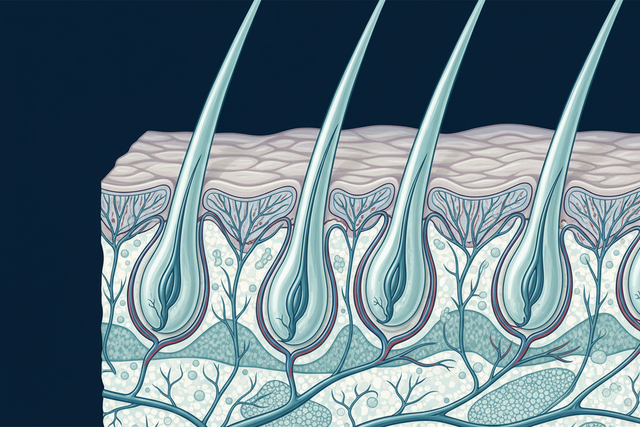
Diagram illustration of the human hair growth cycle showing anagen, catagen, and telogen phases
Aug 20, 2026

How Hair Growth Works

Hair loss is a disruption of a biological cycle — not something that simply happens to you. Understanding how the ana...

Read More
Editorial close-up of glass vials, a dropper bottle, and hair strands arranged beside a timeline graphic on a dark charcoal surface — hair loss treatment timeline
Aug 20, 2026 Hair Growth

Hair Loss Treatment Timeline

How long does hair loss treatment actually take? This guide breaks down what to expect month by month — from the firs...

Read More
Dark supplement bottle, fresh spinach, kale, and green botanicals on white marble — cellular detox and toxin burden science
Aug 04, 2026

Signs Your Body Needs A Cellular Detox (And What To Do About It)

Fatigue, brain fog, chemical sensitivity, and slow recovery aren't random — they're often signs that your cellular de...

Read More
Dark supplement bottle, sliced lemon, rose petals, and green leaves on white marble — glutathione and skin health science
Aug 04, 2026

Glutathione And Skin Health: The Science Behind The Glow

Glutathione is best known as your body's master antioxidant — but its effects on skin tone, UV protection, collagen i...

Read More
Dark supplement bottle, walnuts, almonds, and blueberries on white marble — CoQ10, mitochondria, and brain health science
Aug 04, 2026

CoQ10 And Brain Health: How Mitochondria Affect Memory, Focus, And Cognitive Performance

Your brain is the most energy-hungry organ in your body — and its performance depends entirely on mitochondrial funct...

Read More
Fresh sliced oranges, a dark supplement bottle, and liposomal capsules on white marble — liposomal vs. regular vitamin C absorption science
Aug 04, 2026

Liposomal vs. Regular Vitamin C: What's The Difference And Which Works Better?

You've been taking vitamin C for years. But how much of it is your body actually absorbing? The difference between st...

Read More
Editorial flat lay of a DNA model, dark supplement bottle, and fresh leafy greens on white marble — MTHFR gene mutation and methylation blog hero
Aug 04, 2026

MTHFR Gene Mutation: What It Means For Your Health And How To Support It

Up to 60% of people carry an MTHFR variant — and most don't know it. Here's what impaired methylation actually does t...

Read More
Editorial flat lay of a dark supplement bottle surrounded by fresh green botanicals and a halved lemon on white marble — glutathione master antioxidant blog hero
Aug 04, 2026

What Is Glutathione And Why Is It Called The Master Antioxidant?

Glutathione is produced in every cell of your body and is the most powerful antioxidant you've never heard of. Here's...

Read More
Body Odor Supplements: Do They Actually Work?
Jul 18, 2026

Body Odor Supplements: Do They Actually Work?

Internal deodorizing supplements are a growing category — but do they live up to the claims? We break down the scienc...

Read More
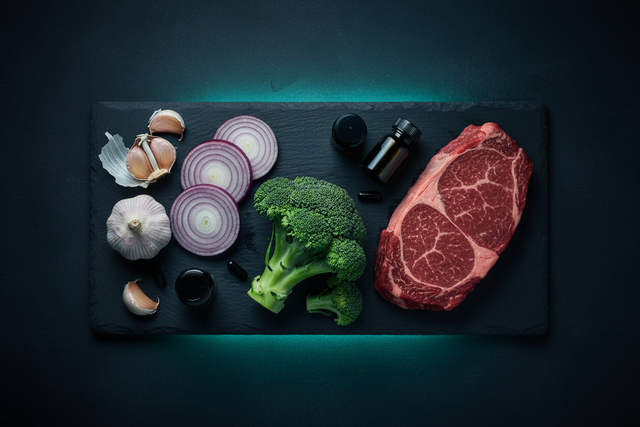
Foods That Cause Body Odor (And What To Do About It)
Jul 18, 2026

Foods That Cause Body Odor (And What To Do About It)

What you eat has a direct and measurable impact on how you smell. Here's which foods are the biggest culprits — and h...

Read More

Why Does Showering Not Always Help With Body Odor?
Jul 18, 2026

Why Does Showering Not Always Help With Body Odor?

If body odor returns within hours of bathing, the problem isn't your hygiene — it's coming from inside your body. Her...

Read More
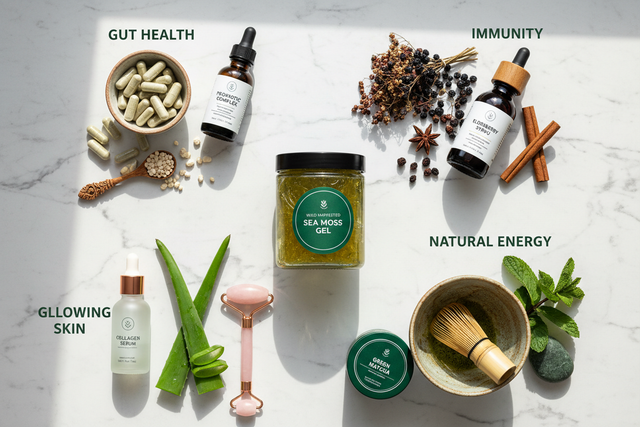
Sea moss gel jar surrounded by elements representing gut health, immunity, skin glow, and natural energy on a white marble surface — Daily Health & Beauty
Jul 05, 2026

Sea Moss For Gut Health, Immunity, Skin & Energy — Which Benefit Is Right For You

Most people come to sea moss for one reason — they heard it was good for gut health, or a friend swore it cleared the...

Read More

Hands holding a jar of golden wild harvested sea moss gel on a white marble kitchen counter with morning light — Daily Health & Beauty daily sea moss benefits guide
Jul 05, 2026

Sea Moss Benefits — What Happens To Your Body When You Take It Daily

Sea moss has been used for centuries in Irish and Caribbean wellness traditions. Modern nutrition science is now catc...

Read More
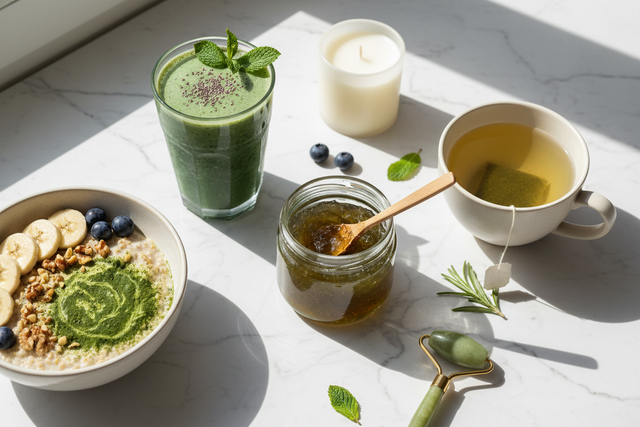
Open sea moss gel jar with wooden spoon next to a smoothie, oatmeal, and tea on a white marble surface — daily sea moss routine guide by Daily Health & Beauty
Jul 05, 2026

How To Take Sea Moss Gel — The Right Way To Add It To Your Daily Routine

Sea moss gel is one of the easiest superfoods to add to your daily routine — but there are a few things worth knowing...

Read More

Wild harvested sea moss growing on Atlantic ocean rocks compared to farmed pool-grown sea moss — Daily Health & Beauty sourcing guide
Jul 05, 2026

Wild Harvested vs. Farmed Sea Moss — Why It Matters More Than You Think

Walk into any health store or scroll through any wellness brand's website and you'll see sea moss everywhere. But loo...

Read More
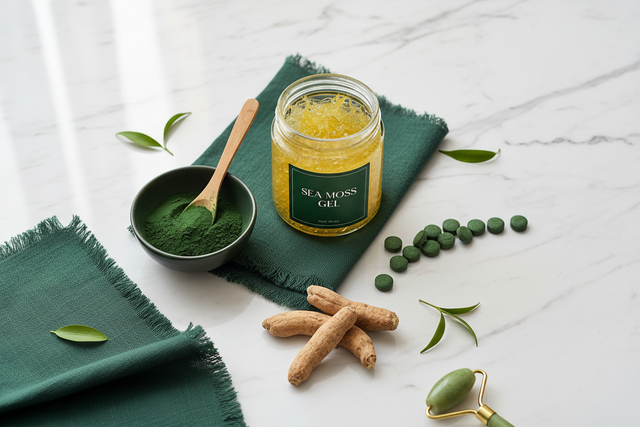
Sea moss gel jar alongside spirulina powder, chlorella tablets, and ashwagandha root on a white marble surface — superfood comparison for Daily Health & Beauty
Jul 05, 2026

Sea Moss vs. Other Superfoods — How It Compares To Spirulina, Chlorella & Ashwagandha

The superfood market is crowded. Spirulina, chlorella, ashwagandha, moringa — every year a new contender claims the t...

Read More
Our Blog
See All Articles
Browse The Full Collection Of Wellness Tips, Guides, And Stories.
Visit The Blog
Join The Community

Your Wellness Resource

Exclusive Offers, Product Spotlights & Wellness Reads — All In Your Inbox.

Please Enter A Valid Email Address.

No Spam. Unsubscribe Anytime. We Respect Your Privacy.

Exclusive Offers
Wellness Reads
First To Know
Tell Us About Yourself

Personalize Your Experience

Share A Little About Yourself And We Will Tailor Your Wellness Journey.

Unlock 10% Off — Add First & Last Name To Claim

Or Subscribe With Email Only Below

Email:
Male
Female
Add Your First & Last Name To Unlock 10% Off