
Daily Health & Beauty

Hair Loss —
Understood.
Addressed.

Hair loss affects over 80 million Americans. The biology behind it is well understood — and so are the solutions. This is your complete guide.

Shop Hair Loss Products

Trusted by 50,000+ people actively treating hair loss right now.

Hair Loss By The Numbers

The Scale Of The Problem

Hair loss is one of the most common conditions in the world — yet it remains widely misunderstood and undertreated.

80M+
Americans affected by hair loss
85%
of men experience significant thinning by age 50
40%
of women experience noticeable hair loss by age 40
30–50%
density lost before thinning becomes visible
12 mo
minimum for full treatment assessment
The Biology

What Hair Loss Actually Is

Hair loss is not something that simply happens to you — it is a disruption of a highly regulated biological cycle. Each of your 80,000–120,000 scalp follicles independently cycles through phases of growth, transition, and rest.

The most common cause is androgenetic alopecia: a genetic sensitivity to dihydrotestosterone (DHT), an androgen derived from testosterone. DHT binds to receptors in the hair follicle and progressively shortens the growth phase — a process called follicular miniaturization.

The critical insight: follicles that are miniaturizing but still active are far more responsive to treatment than follicles that have been dormant for years. Early intervention produces the best outcomes.

The Follicle

Each hair follicle is a self-contained organ with its own blood supply, nerve endings, and stem cell population. The dermal papilla at its base receives hormonal signals and controls the growth cycle.

DHT & Miniaturization

DHT binds to androgen receptors in the dermal papilla, shortening the anagen phase over successive cycles. Each new hair grows thinner and shorter until the follicle stops producing visible hair.

Why It Takes Time

Because follicles cycle independently over years, hair loss develops gradually — and treatment results emerge on the same timescale. Meaningful change requires consistent treatment over 6–12 months minimum.

The Window For Action

By the time most people notice thinning, they have lost 30–50% of density in the affected area. Acting early — before significant miniaturization — produces dramatically better outcomes.

Causes

Why Hair Falls Out

Hair loss is a symptom with many possible causes. Identifying the right cause is the only way to choose the right response.

Androgenetic Alopecia

The most common cause — genetic sensitivity to DHT progressively miniaturizes follicles over years. Affects 50M men and 30M women in the US alone.

Learn About Causes

DHT & Follicle Miniaturization

Dihydrotestosterone binds to follicle receptors and shortens the anagen phase over successive cycles — producing thinner, shorter hairs until growth stops.

Understand DHT

Hormonal Shifts

Estrogen protects hair growth. Postpartum, perimenopause, menopause, and stopping hormonal contraceptives all reduce estrogen — amplifying DHT's effect on susceptible follicles.

Hair Loss In Women

Telogen Effluvium

A sudden increase in shedding triggered by physiological shock — childbirth, surgery, illness, rapid weight loss, or extreme stress. Usually temporary but can unmask underlying alopecia.

Learn More

Nutritional Deficiency

Iron deficiency (low ferritin), zinc, protein, and vitamin D deficiencies can all impair the hair growth cycle. Hair follicles are among the most metabolically active structures in the body.

Learn More

Scalp Health

Scalp inflammation amplifies DHT-driven miniaturization. Seborrheic dermatitis, psoriasis, and poor circulation all impair the follicle environment and accelerate thinning.

Learn More
The Hair Growth Cycle

Three Phases. One Follicle. Repeated For Life.

Every follicle independently cycles through three phases. Understanding this cycle is the foundation of understanding any hair loss treatment.

2–7
Years
Anagen — Growth
The active growth phase. Cells in the hair bulb divide rapidly, pushing the hair shaft upward. The length of your anagen phase determines how long your hair can grow.
85–90% of hairs at any time
2–3
Weeks
Catagen — Transition
A brief transitional phase. The follicle shrinks, the dermal papilla detaches from the hair bulb, and the hair stops growing. Normal — not a sign of hair loss.
1–3% of hairs at any time
~3
Months
Telogen — Rest & Shed
The follicle rests while a new anagen hair forms beneath. The old hair sheds — this accounts for the normal 50–100 hairs lost per day.
10–15% of hairs at any time
Myth vs Fact

Common Hair Loss Misconceptions

Hair loss is surrounded by myths that lead people to either panic unnecessarily or dismiss real early warning signs.

✕

Wearing hats causes hair loss

False. Hats do not restrict blood flow to follicles or cause miniaturization. Androgenetic alopecia is driven by DHT and genetics — not headwear.

✕

Hair loss only affects older men

False. Androgenetic alopecia can begin in the late teens or early twenties. It affects 40% of women by age 40 and is not age-restricted.

✕

Frequent shampooing causes hair loss

False. Washing removes hairs already in the telogen phase that would shed anyway. Regular cleansing actually supports scalp health and follicle function.

✕

Hair loss is always permanent

False. Telogen effluvium, nutritional deficiency, and hormonal hair loss are often reversible. Even androgenetic alopecia can be significantly slowed with early, consistent treatment.

✓

Stress can cause hair loss

True. Both acute stress (triggering telogen effluvium) and chronic stress (elevating cortisol) can disrupt the hair growth cycle and increase shedding.

✓

Early intervention produces better results

True. Follicles in early miniaturization are far more responsive to treatment than dormant ones. Starting before significant thinning is visible produces the best outcomes.

Treatment

What Actually Works

Effective hair loss treatment targets the cycle at specific points. The best protocols combine multiple strategies.

Foundation

Scalp Health & Nutrition

A clean, well-circulated scalp absorbs active ingredients more effectively. Addressing iron, ferritin, zinc, and protein deficiencies removes a key barrier to follicle function.

Cosmetic Topical

DHT-Targeting Formulations

Shampoos and serums containing saw palmetto, ketoconazole, and advanced complexes like FOLIGAIN's TRIOXIDIL reduce DHT activity at the scalp level without systemic effects.

OTC Treatment

Minoxidil

The most widely studied topical treatment for hair loss. Prolongs the anagen phase and improves follicle blood supply. FDA-approved. Works best combined with DHT-targeting approaches.

Prescription

Finasteride / Dutasteride

Oral 5-alpha reductase inhibitors that reduce DHT production systemically. Clinically proven for androgenetic alopecia. Prescription only — consult a physician.

The timeline reality: Hair loss treatment works on the hair cycle's schedule — not yours. Meaningful results require consistent application over a minimum of 3–6 months, with full assessment at 12 months. Most people quit right before results appear. See the month-by-month timeline

FOLIGAIN At Daily Health & Beauty

Science-Driven Hair Care. Trusted By Millions.

FOLIGAIN has been formulating advanced cosmetic hair care since 2008 — trusted in 45+ countries. Their award-winning TRIOXIDIL complex is manufactured in the USA. We carry their full lineup alongside our DH&B Curated bundles designed to build a complete hair loss protocol.

Shop All Hair Loss Products

Hair Loss Products

Tag:
Sort:
Loading Products...

Scroll Horizontally To Explore More Products

No Products Found For This Filter.
FAQ

Frequently Asked Questions

Answers to the most common questions about hair loss, treatment, and what to expect.

Meaningful results require a minimum of 3–6 months of consistent treatment, with full assessment at 12 months. The hair growth cycle operates on a timescale of months to years — there are no shortcuts. Most people experience an initial shedding phase in the first 4–8 weeks, which is a normal sign that the treatment is working.
It depends on the cause. Telogen effluvium is usually temporary and self-resolving. Androgenetic alopecia is progressive but can be significantly slowed or partially reversed with early, consistent treatment. Follicles that are miniaturizing but still active are recoverable — follicles dormant for many years may not be.
The "dread shed" refers to increased shedding in the first 4–8 weeks of starting minoxidil or other treatments. Follicles in prolonged telogen are pushed into a new anagen cycle — the old hairs shed first to make way for new growth. It is a sign the treatment is working, not failing, and typically resolves within 2 months.
For androgenetic alopecia, yes — treatment is an ongoing maintenance protocol. Stopping treatment typically results in a return to the pre-treatment state within 3–12 months. For temporary causes like telogen effluvium, treatment can be discontinued once the trigger is resolved.
Losing 50–100 hairs per day is considered normal. Shedding that consistently exceeds this, or that is accompanied by visible thinning, a widening part, or a thinner ponytail, warrants attention. Monthly photography in consistent conditions is the most reliable way to track changes objectively.
Many treatments are used by both men and women, but with differences. Minoxidil 5% foam is now widely used by women due to lower systemic absorption. Finasteride is generally not recommended for women of childbearing age. FOLIGAIN offers formulations specifically designed for women's hair loss patterns and needs.

This page is for informational purposes only and does not constitute medical advice. Hair loss has many causes — some of which require medical diagnosis and treatment. Consult a licensed healthcare professional or dermatologist for diagnosis and treatment of hair loss conditions. Product descriptions refer to cosmetic formulations and do not constitute drug claims.

The Daily Health & Beauty Blog

Wellness Tips, Insights & More

Stay In The Know — Expert Advice, Product Spotlights, And Health Insights.
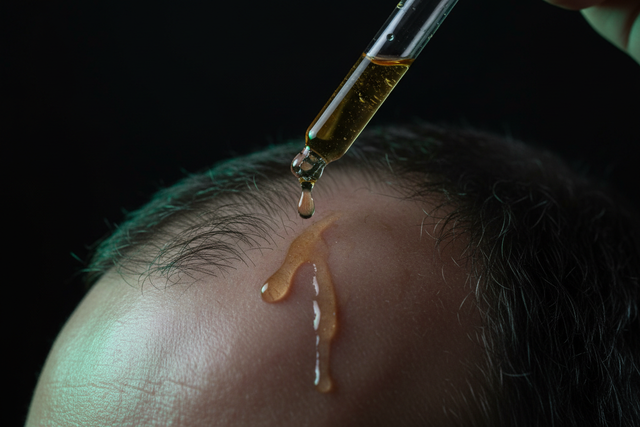
Topical minoxidil serum being applied to scalp with dropper for hair loss treatment
Aug 20, 2026

Minoxidil For Hair Loss

Minoxidil is the most widely used topical treatment for hair loss — and one of the few with decades of clinical evide...

Read More
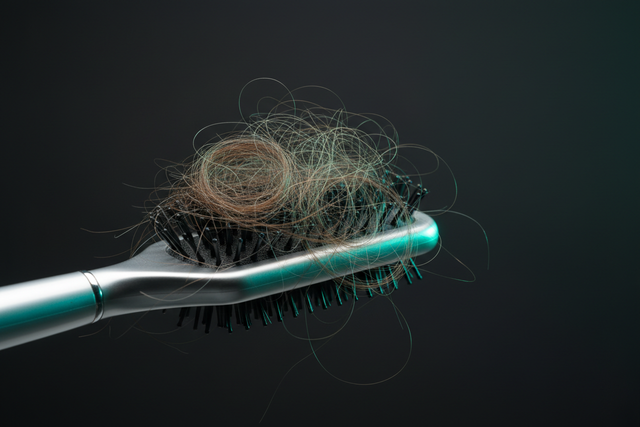
Close-up of hair strands collected in a hairbrush illustrating excessive hair shedding and hair loss causes
Aug 20, 2026

Why Is My Hair Falling Out?

Noticing more hair in the shower, on your pillow, or in your brush? Hair loss has many causes — some temporary, some ...

Read More

Woman examining thinning hair at the crown, illustrating female pattern hair loss and androgenetic alopecia in women
Aug 20, 2026

Hair Loss In Women

Hair loss in women is more common than most people realize — and it's frequently misunderstood. Learn the causes of f...

Read More
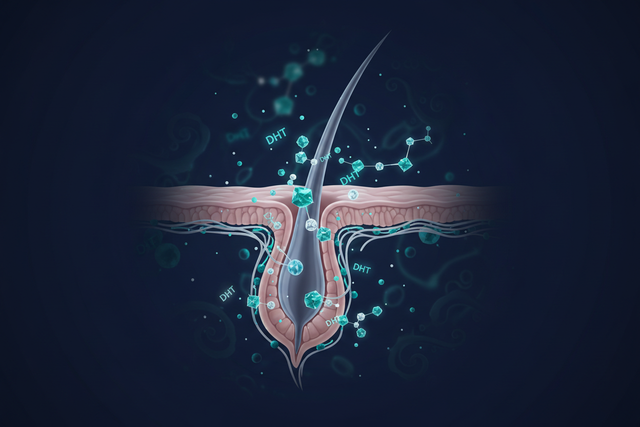
Scientific illustration showing DHT hormone binding to hair follicle receptors causing follicular miniaturization and hair loss
Aug 20, 2026

DHT And Hair Loss

DHT is the primary hormonal driver of pattern hair loss in both men and women. Learn how dihydrotestosterone shrinks ...

Read More
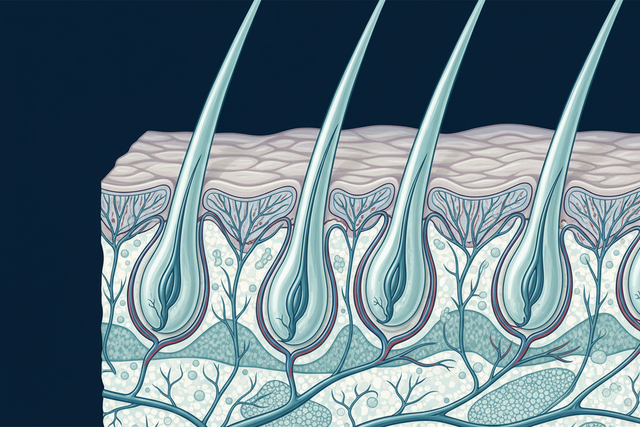
Diagram illustration of the human hair growth cycle showing anagen, catagen, and telogen phases
Aug 20, 2026

How Hair Growth Works

Hair loss is a disruption of a biological cycle — not something that simply happens to you. Understanding how the ana...

Read More

Editorial close-up of glass vials, a dropper bottle, and hair strands arranged beside a timeline graphic on a dark charcoal surface — hair loss treatment timeline
Aug 20, 2026 Hair Growth

Hair Loss Treatment Timeline

How long does hair loss treatment actually take? This guide breaks down what to expect month by month — from the firs...

Read More
Dark supplement bottle, fresh spinach, kale, and green botanicals on white marble — cellular detox and toxin burden science
Aug 04, 2026

Signs Your Body Needs A Cellular Detox (And What To Do About It)

Fatigue, brain fog, chemical sensitivity, and slow recovery aren't random — they're often signs that your cellular de...

Read More
Dark supplement bottle, sliced lemon, rose petals, and green leaves on white marble — glutathione and skin health science
Aug 04, 2026

Glutathione And Skin Health: The Science Behind The Glow

Glutathione is best known as your body's master antioxidant — but its effects on skin tone, UV protection, collagen i...

Read More

Dark supplement bottle, walnuts, almonds, and blueberries on white marble — CoQ10, mitochondria, and brain health science
Aug 04, 2026

CoQ10 And Brain Health: How Mitochondria Affect Memory, Focus, And Cognitive Performance

Your brain is the most energy-hungry organ in your body — and its performance depends entirely on mitochondrial funct...

Read More

Fresh sliced oranges, a dark supplement bottle, and liposomal capsules on white marble — liposomal vs. regular vitamin C absorption science
Aug 04, 2026

Liposomal vs. Regular Vitamin C: What's The Difference And Which Works Better?

You've been taking vitamin C for years. But how much of it is your body actually absorbing? The difference between st...

Read More

Editorial flat lay of a DNA model, dark supplement bottle, and fresh leafy greens on white marble — MTHFR gene mutation and methylation blog hero
Aug 04, 2026

MTHFR Gene Mutation: What It Means For Your Health And How To Support It

Up to 60% of people carry an MTHFR variant — and most don't know it. Here's what impaired methylation actually does t...

Read More

Editorial flat lay of a dark supplement bottle surrounded by fresh green botanicals and a halved lemon on white marble — glutathione master antioxidant blog hero
Aug 04, 2026

What Is Glutathione And Why Is It Called The Master Antioxidant?

Glutathione is produced in every cell of your body and is the most powerful antioxidant you've never heard of. Here's...

Read More

Body Odor Supplements: Do They Actually Work?
Jul 18, 2026

Body Odor Supplements: Do They Actually Work?

Internal deodorizing supplements are a growing category — but do they live up to the claims? We break down the scienc...

Read More

Foods That Cause Body Odor (And What To Do About It)
Jul 18, 2026

Foods That Cause Body Odor (And What To Do About It)

What you eat has a direct and measurable impact on how you smell. Here's which foods are the biggest culprits — and h...

Read More

Why Does Showering Not Always Help With Body Odor?
Jul 18, 2026

Why Does Showering Not Always Help With Body Odor?

If body odor returns within hours of bathing, the problem isn't your hygiene — it's coming from inside your body. Her...

Read More

Sea moss gel jar surrounded by elements representing gut health, immunity, skin glow, and natural energy on a white marble surface — Daily Health & Beauty
Jul 05, 2026

Sea Moss For Gut Health, Immunity, Skin & Energy — Which Benefit Is Right For You

Most people come to sea moss for one reason — they heard it was good for gut health, or a friend swore it cleared the...

Read More

Hands holding a jar of golden wild harvested sea moss gel on a white marble kitchen counter with morning light — Daily Health & Beauty daily sea moss benefits guide
Jul 05, 2026

Sea Moss Benefits — What Happens To Your Body When You Take It Daily

Sea moss has been used for centuries in Irish and Caribbean wellness traditions. Modern nutrition science is now catc...

Read More

Open sea moss gel jar with wooden spoon next to a smoothie, oatmeal, and tea on a white marble surface — daily sea moss routine guide by Daily Health & Beauty
Jul 05, 2026

How To Take Sea Moss Gel — The Right Way To Add It To Your Daily Routine

Sea moss gel is one of the easiest superfoods to add to your daily routine — but there are a few things worth knowing...

Read More

Wild harvested sea moss growing on Atlantic ocean rocks compared to farmed pool-grown sea moss — Daily Health & Beauty sourcing guide
Jul 05, 2026

Wild Harvested vs. Farmed Sea Moss — Why It Matters More Than You Think

Walk into any health store or scroll through any wellness brand's website and you'll see sea moss everywhere. But loo...

Read More

Sea moss gel jar alongside spirulina powder, chlorella tablets, and ashwagandha root on a white marble surface — superfood comparison for Daily Health & Beauty
Jul 05, 2026

Sea Moss vs. Other Superfoods — How It Compares To Spirulina, Chlorella & Ashwagandha

The superfood market is crowded. Spirulina, chlorella, ashwagandha, moringa — every year a new contender claims the t...

Read More
Our Blog
See All Articles
Browse The Full Collection Of Wellness Tips, Guides, And Stories.
Visit The Blog
Join The Community

Your Wellness Resource

Exclusive Offers, Product Spotlights & Wellness Reads — All In Your Inbox.

Please Enter A Valid Email Address.

No Spam. Unsubscribe Anytime. We Respect Your Privacy.

Exclusive Offers
Wellness Reads
First To Know
Tell Us About Yourself

Personalize Your Experience

Share A Little About Yourself And We Will Tailor Your Wellness Journey.

Unlock 10% Off — Add First & Last Name To Claim

Or Subscribe With Email Only Below

Email:
Male
Female
Add Your First & Last Name To Unlock 10% Off