DHT And Hair Loss
Daily Health & Beauty
Hair Loss Hub
DHT And Hair Loss: What The Hormone Explains
DHT plays an important role in pattern hair loss, particularly in men. But it is not the explanation for every change in your hair. Learn how hormones and follicle sensitivity fit together, and how to compare treatment and cosmetic-care claims without assuming they mean the same thing.
Explore The Hair Loss Hub →What Is DHT?
Dihydrotestosterone, usually shortened to DHT, is an androgen, a type of sex hormone. An enzyme called 5-alpha reductase helps convert testosterone into DHT. DHT has normal biological roles, including roles in male development; it is not simply a harmful substance that everyone should try to eliminate.[1]
In androgenetic alopecia, genetic and hormonal factors influence what happens at the follicle. MedlinePlus explains that this form of hair loss, particularly in men, is related to androgens including DHT. A family tendency and how follicles respond are part of the picture.[2]
A receding hairline or widening part does not tell you your DHT level, establish a diagnosis, or show that you should lower a hormone yourself. Describe the change and discuss the likely cause with a dermatologist rather than choosing a hormone-targeting routine from appearance alone.
From Hormone Signals To Hair Changes
How Pattern Hair Loss Changes Hair Growth
MedlinePlus describes how androgen stimulation can shorten the growing period, resulting in shorter, thinner strands and delayed replacement of shed hairs. These changes contribute to the process often called follicular miniaturization.[2]
A Shorter Growing Period
Changes in the growth cycle can mean a hair does not grow for as long before entering the next phase. That is different from assuming a single shed hair means the follicle has permanently stopped working.[2]
Finer, Shorter Strands
Hairs may become shorter and thinner, contributing to less visible coverage. The biological explanation does not tell you precisely how much density an individual has lost or how much a treatment can restore.[2]
A Pattern That Needs Context
Men may notice a receding hairline or thinning at the crown. Women may notice a widening part and less fullness across the top. These observations help guide an assessment, but they are not a substitute for one.[3][4]
For the broader biology, read How Hair Growth Works. The points above describe concepts, not a universal three-stage grading system or a prediction that every follicle is recoverable.
What About DHT And Women?
Androgens play a role in female pattern hair loss, but MedlinePlus notes that other factors that are not yet fully understood are involved. It is too simple to describe every woman’s thinning as the same DHT-driven process seen in male pattern loss.[2]
Postpartum shedding, gradual pattern thinning, and hair changes around menopause should not automatically be grouped together as a sudden increase in DHT activity. The AAD describes excessive shedding after events such as childbirth or illness as a different situation from other types of hair loss.[4][5]
Explore the distinctions in Hair Loss In Women.
Treatment And Cosmetic Care Are Different Categories
Prescription DHT-Targeting Treatment
Finasteride is a prescription medicine in the 5-alpha reductase inhibitor class. MedlinePlus describes its use for male pattern hair loss. Suitability, benefits, and side effects require a prescribing discussion; this is not a recommendation for every reader to take a hormone-targeting medicine.[7]
Its precautions include not handling broken or crushed finasteride tablets if you are pregnant or could become pregnant. Read the complete medicine information and follow the prescriber’s guidance.[7]
Minoxidil As Another Treatment Option
Topical minoxidil can help some people with pattern hair loss, and many men see results using it alone. A dermatologist may add another treatment according to the diagnosis and individual needs. That does not establish that every cosmetic serum or shampoo produces an additional regrowth benefit when combined with it.[3]
Follow the exact product’s directions and warnings. Read Minoxidil For Hair Loss for product-comparison and expectation guidance.
Cosmetic Hair And Scalp Care
Shampoos, conditioners, and cosmetic leave-on formulas have their own intended uses and product-specific claims. Cleansing, conditioning, fuller-looking hair, and medicinal regrowth are not interchangeable outcomes.
Assess a named formula on its own evidence and directions. Do not automatically extend an ingredient finding or a product-specific claim to every cosmetic, every cause of hair loss, or an entire bundle.
How To Read A “DHT” Product Claim
- Identify The Product Category. Is it a prescription medicine, a nonprescription medicine, or cosmetic hair care? Do not assume a shared marketing term means they do the same thing.
- Check The Outcome. A claim about appearance or conditioning is different from demonstrating that hair regrows.
- Look At What Was Tested. An ingredient study, a laboratory result, and a study of the finished product answer different questions. Read the context rather than treating them as equivalent.
- Keep Directions Separate. A bundle can be a purchasing convenience without establishing one combined application schedule or an added treatment benefit.
- Ask What Fits The Cause. Choose the next step based on the problem you are addressing, not on the assumption that every instance of shedding needs DHT reduction.
When To Seek Advice
A widening part, a receding hairline, or a change in fullness is worth discussing without waiting to calculate a percentage of hair loss. The AAD notes that treatment for pattern hair loss can be more helpful when started early.[3][4]
Sudden shedding after an illness, patchy loss, scalp symptoms, a thyroid problem, or a possible medication effect deserves consideration on its own terms. Do not assume these changes have one DHT explanation, and do not stop a prescribed medicine because you suspect it affects your hair without speaking to its prescriber.[5][6]
For a broader starting point, read Why Is My Hair Falling Out?
Hair Loss Products
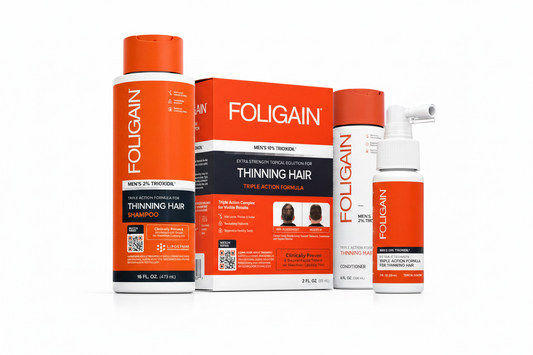
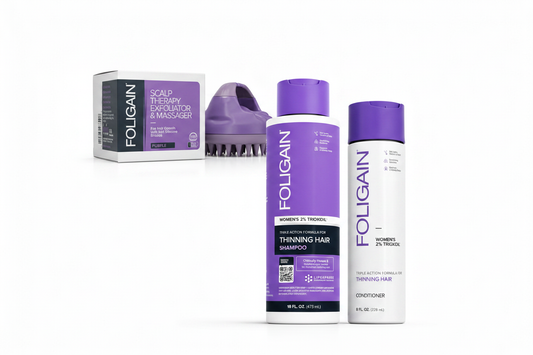
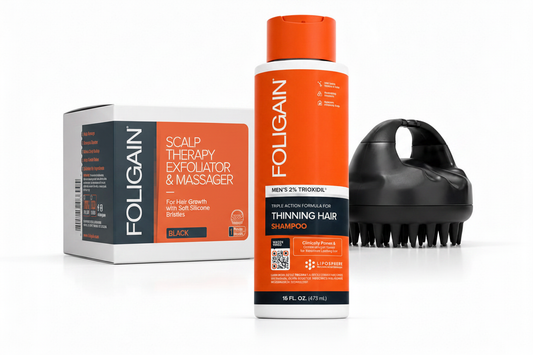
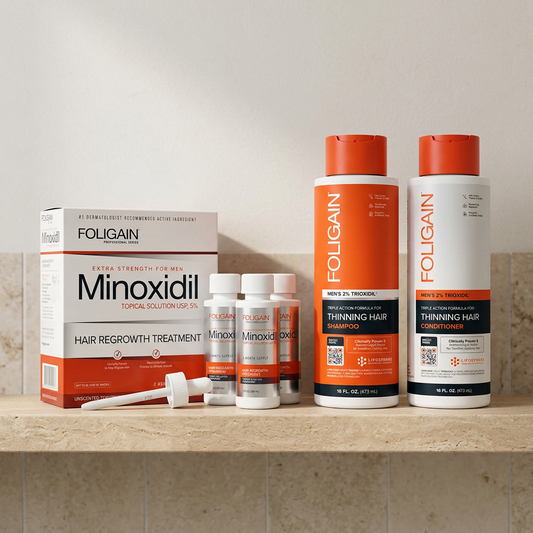
Explore Men’s And Women’s Minoxidil, Compare Cosmetic Hair Care, Or Choose A DH&B Curated Bundle. Each Product Has Its Own Directions—Choose The Options That Fit Your Needs.
← Scroll Horizontally To Explore More Products →
Further Reading
Continue Exploring Hair Loss
Explore The Hair Loss Hub And Five Related Guides On Hair Growth, Minoxidil, And More.
Explore The Hair Loss Hub →Why Is My Hair Falling Out?
Explore Common Causes And Factors That Can Affect Hair And Scalp.
Read The Guide → ScienceHow Hair Growth Works
Get To Know The Hair Follicle And The Hair Growth Cycle.
Read The Guide → MinoxidilMinoxidil For Hair Loss
Explore Our Guide To Minoxidil, Its Use, And What To Consider.
Read The Guide → For WomenHair Loss In Women
Read About Female Hair Loss, Common Patterns, And Contributing Factors.
Read The Guide → TimelineHair Loss Treatment Timeline
Explore Treatment Timelines And Questions To Discuss With Your Healthcare Provider.
Read The Guide →Sources & Further Reading
- Cleveland Clinic: DHT And Its Roles
- MedlinePlus Genetics: Androgenetic Alopecia
- AAD: Male Pattern Hair Loss And Its Treatment
- AAD: Female Pattern Hair Loss
- AAD: Hair Loss And Hair Shedding
- AAD: Causes Of Hair Loss
- MedlinePlus: Finasteride Drug Information
These medical references support the educational information, not an endorsement of the products offered here. Product-specific facts and instructions appear on the individual product pages.
This article is for informational purposes only and does not constitute medical advice. Consult a licensed healthcare professional for diagnosis and treatment of hair loss conditions.